

Navigating the Future of Spine Surgery: A Conversation on Endoscopic Advancements
In the medical field, innovation drives progress. For those of us in neurosurgery, the evolution of endoscopy as a transformative tool in spinal surgeries promises to redefine patient outcomes and surgical efficiency. In a dialogue between Meng Huang, a stalwart neurosurgeon at Houston Methodist, and Ahilan "Siva" Sivaganesan, a new addition to the HSS program in Naples, Florida, this narrative unfolds with fervent insights and compelling proposals.
Introducing Our Speakers
Meng Huang is a neurosurgeon deeply involved in the breakthrough developments of spinal endoscopy. As a founding member of the International Spinal Endoscopic Research Foundation (iSERF), Meng dedicates his efforts to fundraising and educational outreach for endoscopic advancements. Joining the dialogue, Siva, also a neurosurgeon, brings a fresh perspective with his recent appointment in Naples, Florida. His interest lies in how endoscopy can influence healthcare economics through innovative reimbursement models and collaborations with major employers.
The Challenges and Vision
The session opens by addressing a prevalent query amongst surgeons and hospital administrators alike: “How do I get my hospital to buy in?” The costs of adopting endoscopic systems appear daunting. However, Meng and Siva see potential in exploring alternative reimbursement structures to encourage system-wide implementation. Siva proposes a bold strategy—approaching major employers directly. By demonstrating the economic value of quick recovery and reduced need for expensive procedures like fusions, the conversation could shift. Employers invested in minimizing downtime could support the premium payment model, thus facilitating a robust case for endoscopic procedures.
Reimagining Financial Strategies
Siva illustrates a typical financial scenario from a hospital’s perspective: the purchase of an endoscopic set seems uneconomical compared to traditional surgeries because of constrained Medicare reimbursement rates. However, reshaping the cost dialogue to focus on long-term savings and efficiency could render a different, more favorable outcome. In addition to driving conversation with employers, Meng and Siva discuss another innovative angle—proposing the integration of endoscopic fusions within current surgical practices. By transitioning some surgeries to an endoscopic approach, the capital expenditure becomes more palatable.

A Realistic Approach?
While Siva’s ambitious plans to collaborate with employers may require time, Meng suggests that starting with endoscopic fusions could yield quicker wins. Introducing endoscopy in cases where fusions are inevitable aligns with hospitals’ financial goals of reducing length of stay, thereby increasing profit margins without substantial up-front risk.
Embracing Change for Long-term Benefits
For Siva and Meng, the importance of embracing endoscopic techniques stems from the understanding that surgery and patient care are ever-evolving. As Meng keenly puts it, younger professionals must consider future financial landscapes and incorporate skills that will remain relevant throughout their careers. By reflecting on past transitions in other fields, such as orthopedics’ shift from open to arthroscopic procedures, both doctors recognize that although the road is complex, the potential for swift adoption exists. ###
Forward-thinking and Collaborative Learning
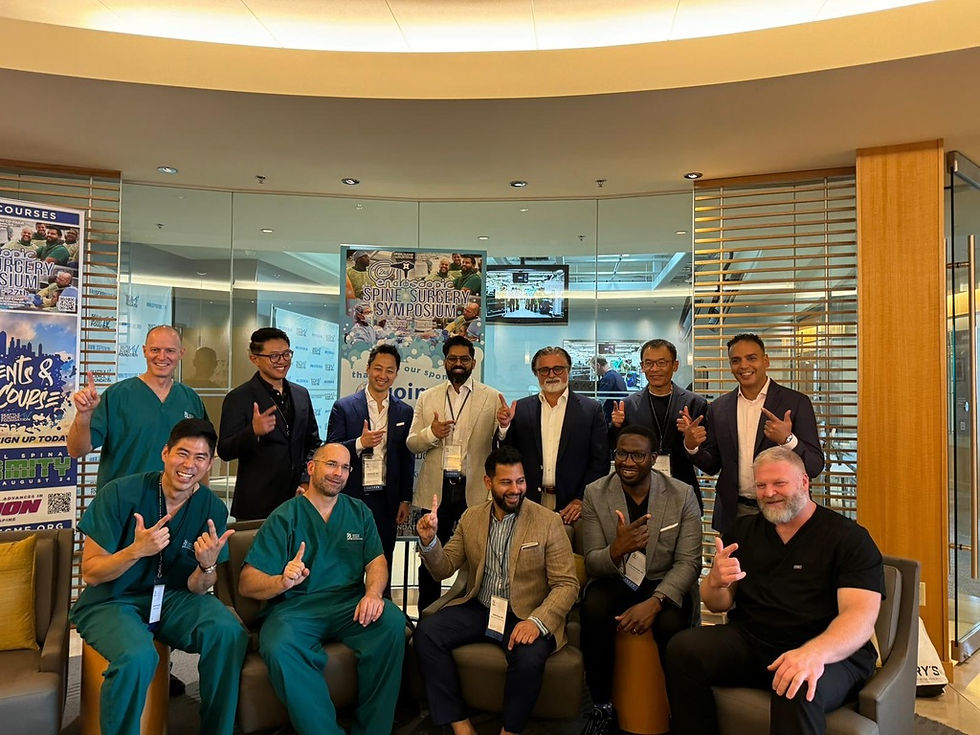
To facilitate widespread adoption, initiatives like the upcoming Houston Methodist Second Annual Purely Full Endoscopic Symposium, organized in collaboration with ICE Surf, are crucial. This event is designed to offer insights and training on unifying endoscopic approaches, emphasizing inclusivity and collective growth within the field. As Meng anticipates, the symposium aims to be a groundbreaking event, featuring a renowned faculty ready to share their wisdom and inspire the next wave of endoscopic specialists. In conclusion, while the journey to fully integrated endoscopic spine surgery in the United States presents challenges, Meng, Siva, and their colleagues are committed to turn these innovative ideas into reality. Through strategic partnerships, insightful discourse, and dedicated advocacy, the future of spinal surgery seems brighter than ever.


Comments